Vin-Q
Vin-Q Brut Nature Rosé - El Celestial Ouroboros 2025
2025 · Brut Nature sparkling rose, traditional method, 36 months sur lattes

Vin-Q Brut Nature Rosé - El Celestial Ouroboros

Two harvests, one variety, thirty-six months. The Crono-Varietal treats time as a component.

Origin
Trepat T1, Trepat T2, and Garnatxa from Verdu, Lleida
Production
about 2,000 bottles
Release
process file indicates late 2028 or early 2029
Style
Brut Nature rosé
Certified Provenance

Vintage Passport

L-XA2025-CAVabout 2,000 bottles
Registered Parcel

Trepat T1, Trepat T2, and Garnatxa from Verdu, Lleida

ES-CT-L-VERDU-P08/P12 · 445m alt

41.6125° N, 1.1441° E

Bottling record & protocols
PV · Precision viticulturePVRV · Regenerative vineyard — not on this lotAN · Ancestral — not on this lotNF · Native fermentation — not on this lotNC · No correction — not on this lotTM · Traditional sparklingTMMR · Maturation and releaseMRVQVQM 1.0
PV Precision viticulture · TM Traditional sparkling · MR Maturation and releaseWhat this seal means

EMBOTELLAT PER RE. 5231 · B-08796 ES

Regenerative and organic practices

declared · not certified

Declared by the vineyard operator and recorded as dated operations and inputs. “Organic” here describes the practice, not certified status — EU organic certification requires a valid certificate from an authorised control body.

Evidence States Log
2 Measured2 Target

No value here is estimated. Each one shows what stands behind it, and a missing critical value holds its gate rather than being filled in.

Verifiable Vintage Passport · Vin-Q System
Release Window: process file indicates late 2028 or early 2029
Why this wine

What makes this lot unusual

A 1,800 L traditional-method rose that treats two Trepat harvest moments as separate biological states, then uses 22.2% Garnatxa for body, glycerol, and the mid-palate needed for long lees ageing.

For restaurant placement and portfolio representation: a long-aged Brut Nature rose with Trepat line, Garnatxa width, and a cellar story that can be explained at the table.

01

Why it is the flagship

It has the largest 2025 volume, the clearest restaurant use case, and the longest ageing commitment in the portfolio.

02

What to tell a table

The wine is built from two Trepat moments and one Garnatxa counterweight. The story is temporal, not simply varietal.

03

Service logic

Use it where Brut Nature freshness must still carry food: cured meat, aged cheese, fish with salt or smoke, mushrooms, and rice.

In the glass

Sensory Profile

Brut Nature traditional-method rose, 36 months sur lattes, zero dosage, and moderate alcohol.

Biophysical Polytope

Sensory Architecture

5 Measurable Dimensions
Freshness 90Aromaticintensity 84Structure andbody 70Salinity 92Perlage &Mousse 96

Click any dimension to see how its position was arrived at.

Aromatic Families

wild strawberrywhite flowercitrus zestchamomilewhite peachtoasted almond

Palate Architecture

fine persistent perlagecreamy mousseGarnatxa mid-palate weightsaline and flinty finish

Finish: Long, dry, saline, and lightly smoky, with the Trepat acidity carrying the autolytic notes.

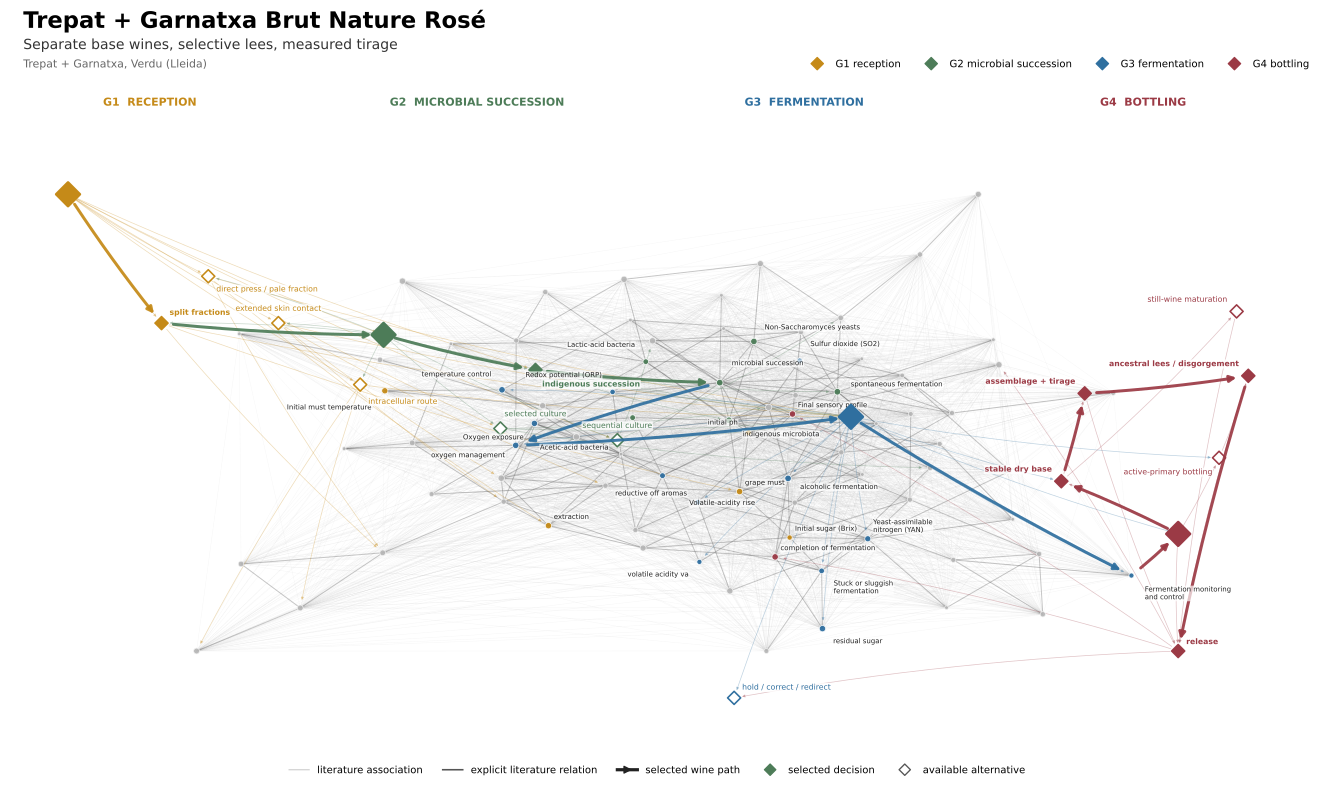
Vin-Q Brut Nature Rosé - El Celestial Ouroboros constructor path
The highlighted road keeps the three base-wine components distinct through reception, selects sound microbial and lees states, protects the assemblage through fermentation, and reaches bottle ageing through measured tirage. Open full size
Constructor path

Selected route for this wine

Can two harvest moments of the same Trepat source preserve freshness and microbial difference while Garnatxa supplies the mid-palate needed for long lees ageing?

  1. 01Vinify Trepat T1, Trepat T2, and Garnatxa separately.
  2. 02Cool all components below 8 deg C and adjust each to pH 3.25.
  3. 03Add Garnatxa first, then smell-check T1, then transfer T2 under CO2 or argon.
  4. 04Retain only clean fine lees and discard heavy sludge.
  5. 05Allow 2-3 days of protected integration, extending to 7 days only under verified anaerobic control; then tirage with EC1118 and age 36 months.
Service

How to serve the wine

Serve at 8-10 deg C in a tulip or white-wine glass with salt-roasted fish, aged sheep cheese, cured meats, mushrooms, or rice dishes.

salt-roasted fishaged sheep cheesecured meatsmushroomsrice dishes