
Vin-Q
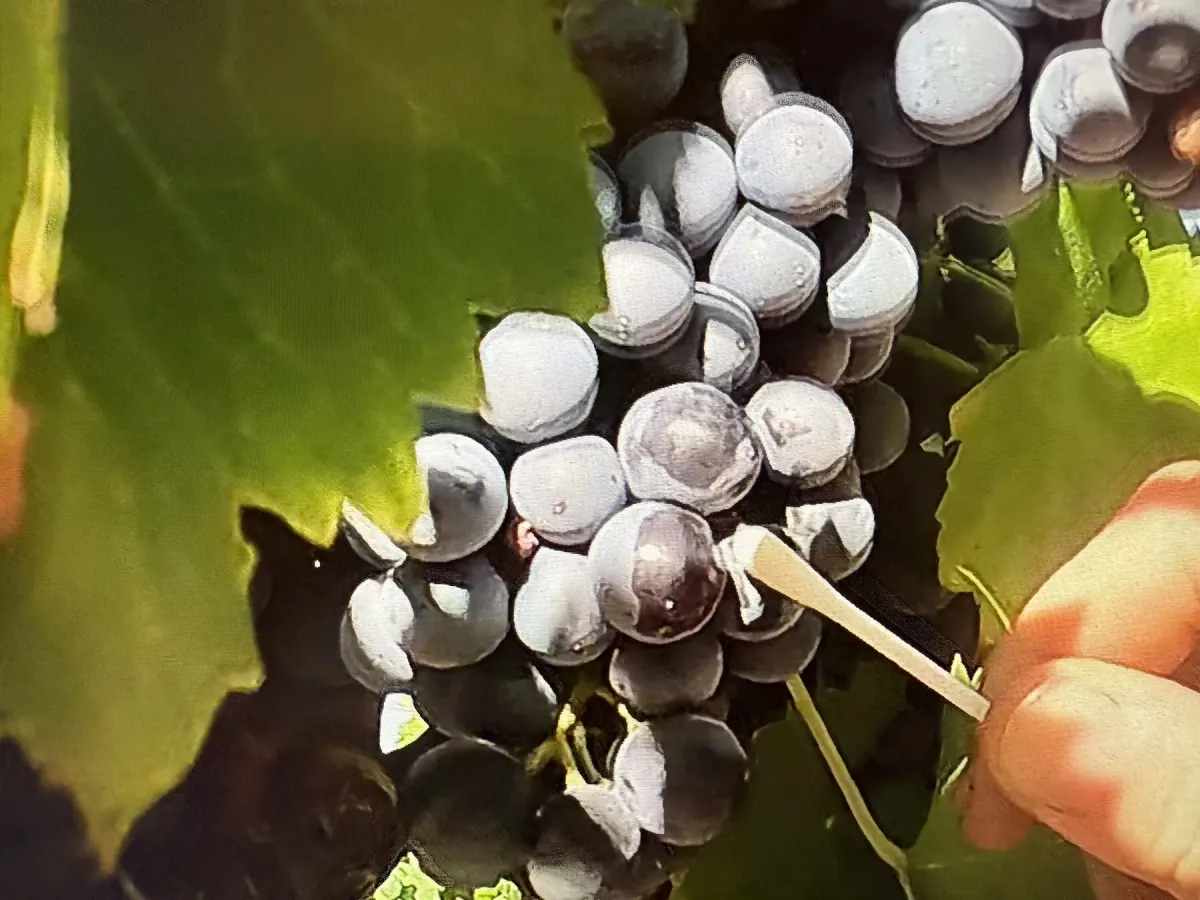
Grape sampling for maturity analysis

Wine creation system

The Vin-Q Method

The intended wine is defined first. Available fruit, vineyard work, harvest, cellar decisions and release are then connected through vintage-specific quality parameters and recorded protocols.

Wine constructor and grape selector

From the wine you want to a proposed blend of available grapes.

Select the wine category, colour, aromatic families, freshness, body, texture, effervescence, ageing route, intervention limits, volume and optional certification. The constructor converts these choices into sensory and analytical targets.

The grape selector searches the live co-creation inventory. It evaluates each available variety and parcel against the target, its intended role in the blend, current vintage measurements, available volume and certification compatibility. The result is a multi-parcel blend proposal with alternatives.

You specify

Wine brief

Wine type and colour
Aromatic families
Freshness and body
Texture and structure
Still or sparkling
Ageing route
Intervention limits
Volume and certification

Vin-Q returns

Grape and blend proposal

Selected varieties
Participating parcels
Role of each component
Proportion range
Available volume
Vintage suitability
Certification compatibility
Alternative components

The first proposal uses current inventory data. After registration, parcel sampling and grape analyses update the component proportions, harvest windows and production route throughout the vintage.

01

Your quality specification

A defined sensory profile with measurable windows for freshness, structure, stability, maturation and release.

02

Your proposed grape blend

Available varieties and participating parcels ranked by component role, vintage suitability, volume and certification compatibility.

03

Decisions for the vintage

Harvest, fermentation, blending, maturation and release choices updated from the current measurements.

04

Your production record

The finished wine linked to its fruit composition, operations, measurements, analyses and responsible participants.

Vineyard module · before reception

Five controls determine what reaches the cellar.

Each proposed parcel is divided into fruit zones. The grower and winemaker use current water state, soil diagnosis, bunch microclimate, skin condition and maturity to decide the action, harvest segment and reception criteria for each component.

Optional material identity layer. A validated chemical or optical fingerprint may be attached to the parcel, harvest segment and finished lot as additional origin and identity evidence. The analytical method, reference population, uncertainty and sample chain must be recorded. A fingerprint supplements parcel identity and chain of custody; it does not replace them.
G2.1

Soil and water

Does the current water and soil state preserve the target berry composition?

Measure: Soil moisture by depth · Matric potential where available · Rainfall and evapotranspiration · Vine water-stress observation or measurement · Compaction and infiltration

A dated water-state decision with parcel-zone boundaries and the next measurement condition.

G2.2

Rhizosphere intervention

Which diagnosed soil function requires intervention in this parcel?

Measure: Compaction and infiltration · Soil moisture and organic-matter context · Nutrient or salinity indicators where relevant · Cover-crop state and competition · Observed response to previous interventions

A purpose-specific intervention record linking diagnosis, material, dose, date and measured response.

G2.3

Canopy and fruit microclimate

Is each fruit zone progressing toward its intended wine component?

Measure: Bunch exposure and canopy porosity · Canopy humidity and disease pressure · Berry and bunch-zone temperature · pH and titratable-acidity trajectory · Phenolic or aromatic maturity

A zone-specific canopy action and maturity trajectory tied to a wine-component role.

G3.1

Skin microbiology before crush

Can the fruit carry the intended microbial route safely into reception?

Measure: Skin integrity and visible rot · Disease and damage history · Yeast or bacteria indicators where available · Fruit temperature and time to reception · Planned sulphur and oxygen handling before crush

A pre-crush microbial baseline and handling instruction that continues into G4 and G5.

G3.2

Harvest segmentation

Which fruit states should remain separate through collection and reception?

Measure: Parcel zone and exposure · Ripeness and acidity trajectory · Sanitary and berry condition · Phenolic or aromatic state · Intended component and extraction route

Identified harvest segments with collection order, component role and reception criteria.

PV · Precision viticulturePVRV · Regenerative vineyardRVAN · AncestralANNF · Native fermentation — not on this lotNC · No correction — not on this lotTM · Traditional sparkling — not on this lotMR · Maturation and releaseMRVQVQM 1.0
PV Precision viticulture · RV Regenerative vineyard · AN Ancestral · MR Maturation and release

The seal on the bottle

What the Vin-Q seal states

Every Vin-Q bottle carries a VQ monogram inside a ring of seven segments — one for each protocol in the Method. The segments drawn in gold, with their two-letter code beside them, are the protocols that bottle’s record actually supports. The faint segments are the ones it does not. The ring is the same on every bottle so the family is recognisable; the constellation of gold is different on each, because it describes that lot and no other.

A segment is earned, not claimed. It is filled only when the gates that protocol governs are complete, the measurements are recorded, and a technical reviewer has signed the release. The example above reads PV, RV, AN and MR: precision viticulture, regenerative vineyard, ancestral route and measured release.

MADE ACCORDING TO THE VIN-Q METHOD

This is a method mark, not a certification mark. An appellation, an organic certificate or any other external scheme keeps its own legal field on the label, separate from the seal.

The seven protocols are set out below.

Protocol library

Select a protocol

Grouped by where each one acts in the vintage, in the order the wine passes through them.

In the vineyardG2–G3

How the fruit is grown and when it is picked.

Fermentation routeG5–G7

How the must becomes wine, and how effervescence is made.

Across the routeG4–G8

Limits that hold from reception through to release.

Maturation and releaseG8

How the wine is aged and what has to be true to release it.

Parcel and vintage

Precision Viticulture Protocol

Soil-water state, weather, disease models, fruit microclimate and maturity measurements are converted into dated parcel-zone and harvest decisions for the intended wine.

Decisions

  • Water-state and canopy operations
  • Disease-treatment timing and dose
  • Sampling, harvest segmentation and reception criteria

Vintage record

  • Weather, water-state and risk curves
  • Dated parcel-zone operation calendar
  • Fruit microclimate and grape composition through harvest
VQPV

Bottle statement · VQM 1.0

Vin-Q Precision Viticulture Protocol

Parcel-zone decisions guided by recorded water, weather, disease-risk and maturity data.

Vintage record

What you receive

Choose the wine. Vin-Q builds its route.

Start with the style, aromas, structure and ageing you want. Vin-Q returns quality targets, a proposed combination of available grapes and the decisions needed for the current vintage.

01

Your wine profile

Aromatic families · freshness · phenolic structure · texture · persistence · colour · effervescence

You set the style and sensory result you want in the bottle, including its development during ageing.

02

Quality targets

Sugar or density · total acidity · pH · alcohol · volatile acidity · phenolics · dissolved oxygen · microbial state

Vin-Q provides measurable target windows for harvest, fermentation, blending, stability and release.

03

Available fruit

Variety · parcel zone · soil-water state · bunch microclimate · skin condition · maturity curve · harvest segment

You receive a proposed blend and a measured vineyard route for the fruit currently offered by participating vineyards.

04

Production route

Lot separation · press fraction · yeast route · temperature · extraction · oxygen · lees · blending · ageing

You receive the vineyard and cellar decisions required to move the actual vintage toward the selected profile.

Decision sequence

Nine gates from commission to release.

At each gate, Vin-Q shows the current measurements, the target range and the available actions. The farmer or winemaker records the decision taken, and every gate ends in one state: pass, conditional pass, hold, redirect or stop. An irreversible action never proceeds on a missing critical value.

G0You

Commission and wine brief

Accept the brief as physically and legally constructible, or revise incompatible requirements.

G1Constructor

Inventory and grape selection

Produce ranked single-parcel and multi-parcel candidates from registered parcels.

G2Farmer

Vineyard plan

Set soil-water, rhizosphere and fruit-microclimate actions from the measured parcel state and intended wine.

G3Farmer and winemaker

Harvest window and final grape selection

Define harvest segments by parcel zone, exposure, maturity, sanitary state, skin microbiology and intended route.

G4Winemaker

Reception and lot acceptance

Accept, sort, split press fractions, reduce the proportion, redirect or stop.

G5Winemaker

Route commitment

Commit the component to its microbial, extraction and endpoint route.

G6Winemaker

Active fermentation and transformation

Continue, change temperature, adjust oxygen handling, separate a fraction, revise the plan, redirect or stop.

G7Winemaker

Endpoint, assemblage and bottling

Finish still, bottle an active primary fermentation, assemble base wines, perform tirage, retain separately, redirect or hold.

G8Technical reviewer

Maturation and release

Continue maturation, disgorge, filter, blend, correct under an allowed protocol, redirect, hold or release.

Method authorisation

What a Vin-Q release certifies

A lot carries the statement MADE ACCORDING TO THE VIN-Q METHOD once its applicable gates, measurements and records are complete and a technical reviewer independent of the reviewed operation signs the release decision. The protocol line lists the modules the record supports.

What Vin-Q issues

A method authorisation. A lot may carry the Vin-Q Method statement only after its applicable gates, measurements and records are complete and a technical reviewer signs the release decision.

  • A released, version-locked Vintage Record for the identified bottle lot
  • The protocol modules the record actually supports, by code
  • The Method and constructor version used for every decision
  • A QR destination resolving to that bottle lot, not to a marketing page

External standards sit alongside

A requested certification enters the constructor as an eligibility constraint before a blend is proposed, and carries its own legal field on the label.

  • Certification rules shape the candidate parcels at Gate 1 (VQM-CON-007)
  • Valid certificates are held as externally certified evidence
  • D.O. Cava and Corpinnat are alternative sparkling routes; a wine takes one
  • A valid certificate is what turns a farming practice into a certified claim

Authorised lot by lot

Authorisation is granted for one identified bottle lot at a time, against the Method and constructor versions used for its decisions. The Vintage Record holds that evidence and stays version-locked after release, so the statement on the bottle always resolves to the record behind it.

How certification and measured quality relate

Next step

Apply the method to a real vintage.